A timing test in one tap
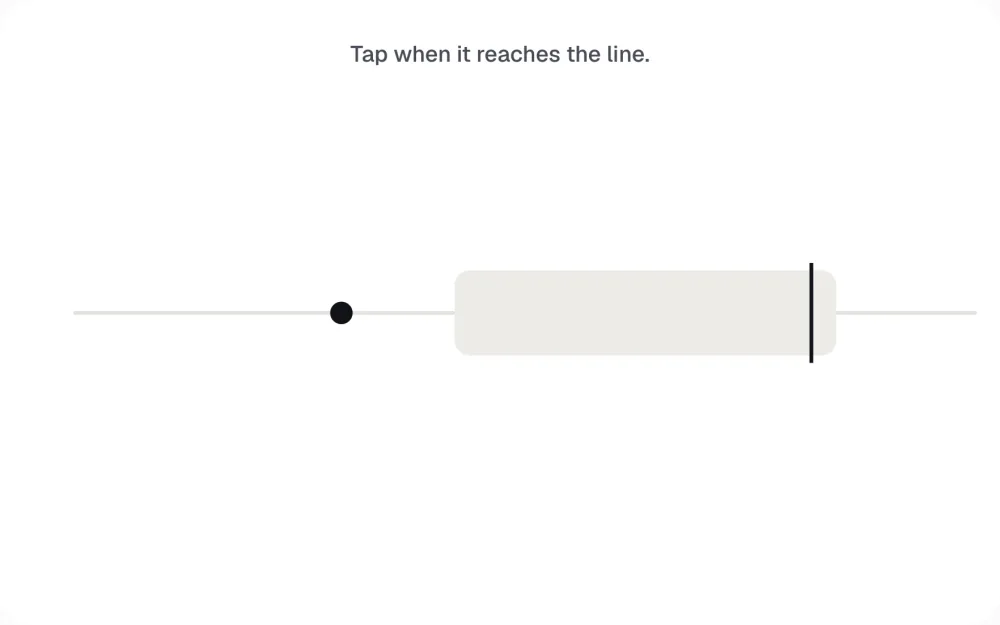
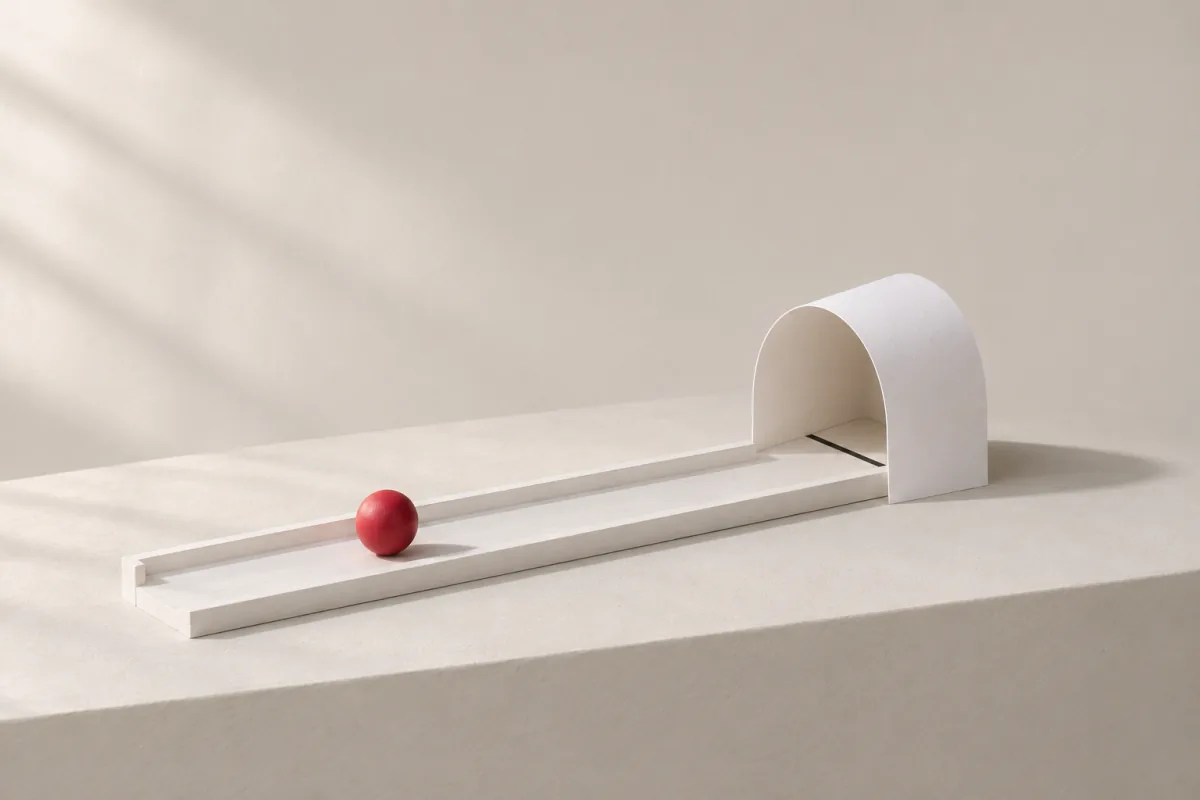
This timing test shows a dot sliding across the board at a steady speed. Partway along, it disappears behind a cover. A line marks the finish inside the cover. Your job is to tap at the exact moment the hidden dot reaches the line.
You see the dot for 1 to 1.6 seconds, long enough to judge its speed. Then it is hidden. On easy rounds it stays hidden for 0.6 to 1 second. On the hardest rounds the hidden stretch grows to 1.4 to 1.8 seconds, so the timing test asks you to keep the beat for longer.
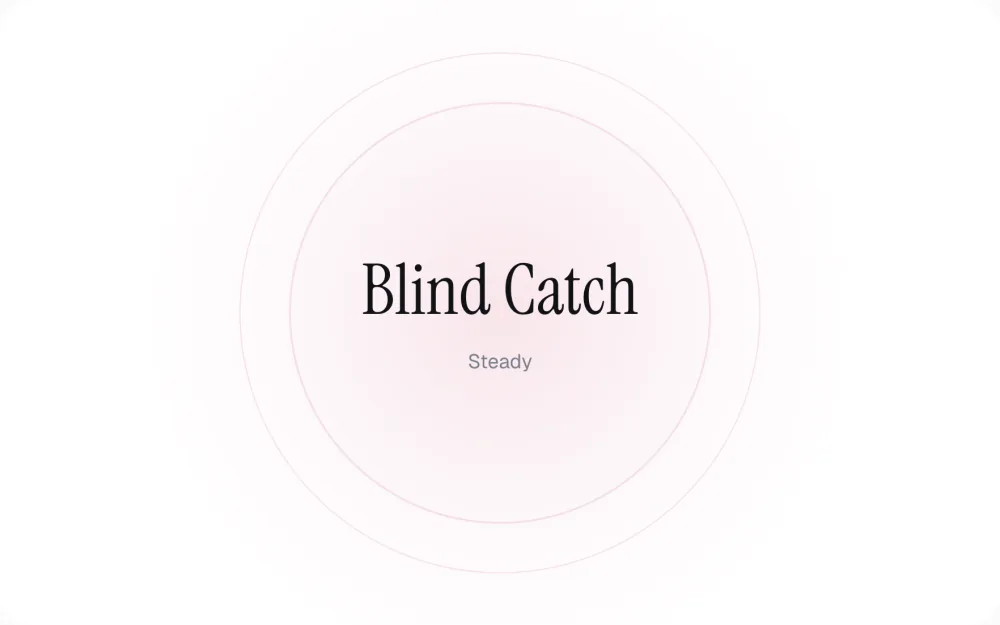
In the game this test is called Blind Catch, and it opens with its name in soft rose-red rings and the level written underneath. You know how hard the round will be before the dot sets off.
Tapping on time
Watch the dot while you can see it. Its speed never changes, so everything you need is in that first stretch. When you think it has reached the line, tap anywhere on the board. On a computer, Space works too.
You get one tap. There is no adjusting and no second try, which is what makes this a timing test rather than a guess you can refine.
The cover hides the dot completely, so there is nothing to peek at. Some players follow it with their eyes across the cover. Others count a beat. Both work, and the reveal tells you which habit serves you better.
How the timing test is scored
Your tap is compared with the moment the dot really reached the line. The miss is then measured as a share of the time the dot was hidden. Being 100 milliseconds late behind a one-second cover counts the same as being 150 late behind a cover of a second and a half.
Tapping right on the line scores 100, and the score falls smoothly the further off you are. Early and late misses count the same. Here is how a round with a one-second cover scores:
| Your tap | Score |
|---|---|
| Right on the line | 100 |
| 50 ms early or late | 99 |
| 100 ms early or late | 97 |
| 150 ms early or late | 93 |
| 200 ms early or late | 88 |
| 300 ms early or late | 75 |
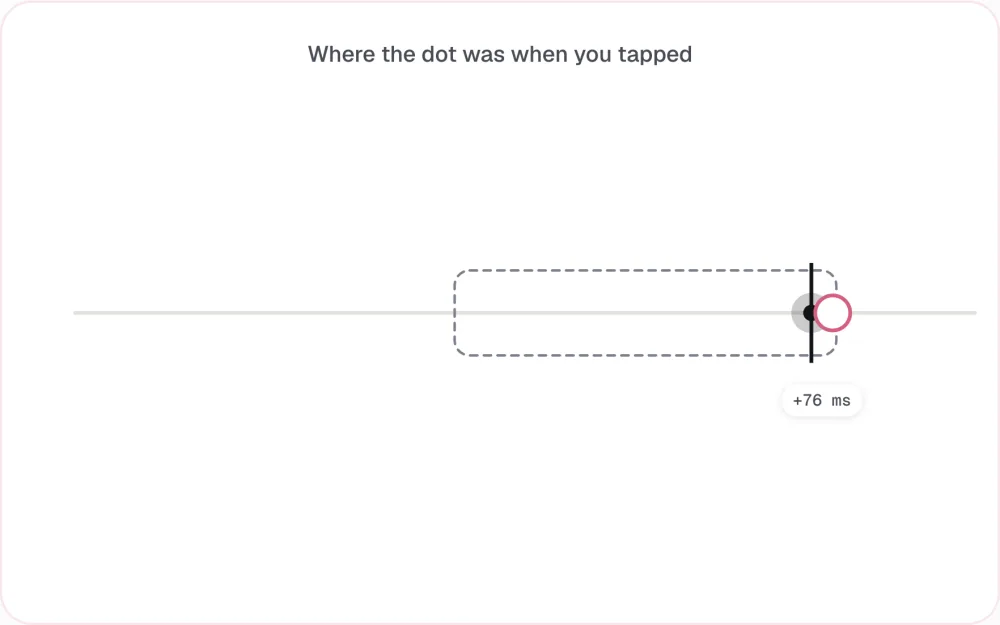
After you tap, the cover lifts and shows where the dot really was, and a small label tells you how far off you were, such as 80 ms too early. In the daily game, the reveal can also show the share of players who tapped early and the share who tapped late.
What a timing test like this measures
Psychologists call this kind of task prediction motion. A moving object disappears behind something, and you judge when it would arrive. Catching a ball, crossing a road and merging into traffic all rely on the same skill: you extend a motion you can no longer see.
Two habits show up in studies again and again. Most people tap a little early when the hidden stretch is long, as if the hidden object sped up. And people differ in how they do it: some track the motion with their eyes, others count time in their head.
This timing test is not a reaction test. There is no signal to react to. Everything depends on how well you read the speed and keep the beat once the dot is gone.
Tips for a better timing test score
- Watch the whole visible stretch. The speed is easier to read over a long distance than a short one.
- Note how far the line sits inside the cover compared with the distance you saw the dot travel.
- Keep your eyes moving at the dot's speed after it disappears, as if you could still see it.
- Check the reveal for a habit. If you are often early, wait a moment longer next time.
- Keep your finger or thumb ready, so the tap lands when you decide, not a moment after.
Most people improve on this timing test within a few rounds, mostly by fixing a steady early or late habit.
Blind Catch in the daily Perceptle
This timing test is one of seventeen perception tests in Perceptle, a free daily game of ten quick tests, each scored out of 100 for a total out of 1000. Ten of the seventeen are drawn each day and get harder from first to last. Everyone plays the same puzzle on the same date, and a new one arrives at local midnight.
On this practice page each new round is a little harder than the one before. For more tests of time, try the time perception test or the reaction time test. How to play explains the daily game.
Questions and answers
What is a good score on the timing test?
Behind a one-second cover, a tap 50 milliseconds off scores about 99, and 100 milliseconds off scores 97. Behind a longer cover the same tap scores a little higher.
Is this a reaction time test?
No. There is no signal to react to. You judge when a hidden dot arrives, so a timing test rewards prediction rather than speed.
Does the dot ever change speed?
No. It moves at one steady speed from start to finish, including behind the cover.
Can I tap again if I miss?
No. You get one tap per round.
Does the timing test work on a phone?
Yes. Tap anywhere on the board. On a computer, Space works too.
Is it free?
Yes. Perceptle is free in any browser, with no account and nothing to install.
Keep the beat
The timing test is one of ten quick tests in today's Perceptle. See how your sense of timing compares with your sense of color, memory and space.
Play today's Perceptle