A mental rotation test in one turn
This mental rotation test shows you a shape for about a second, then takes it away. When it comes back, it has been turned. Your job is to turn it back to exactly how it stood. There is no outline to match and no ghost to line up with, so you have to hold the first picture in your head while you turn.
Every shape is built from square tiles, like a puzzle piece, and none of them looks the same after a half turn. That means every shape has one right answer. Easy rounds use shapes of five or six tiles and show them for 1.4 seconds. The hardest rounds use bent shapes of seven to nine tiles and cut the time to 0.9 seconds.
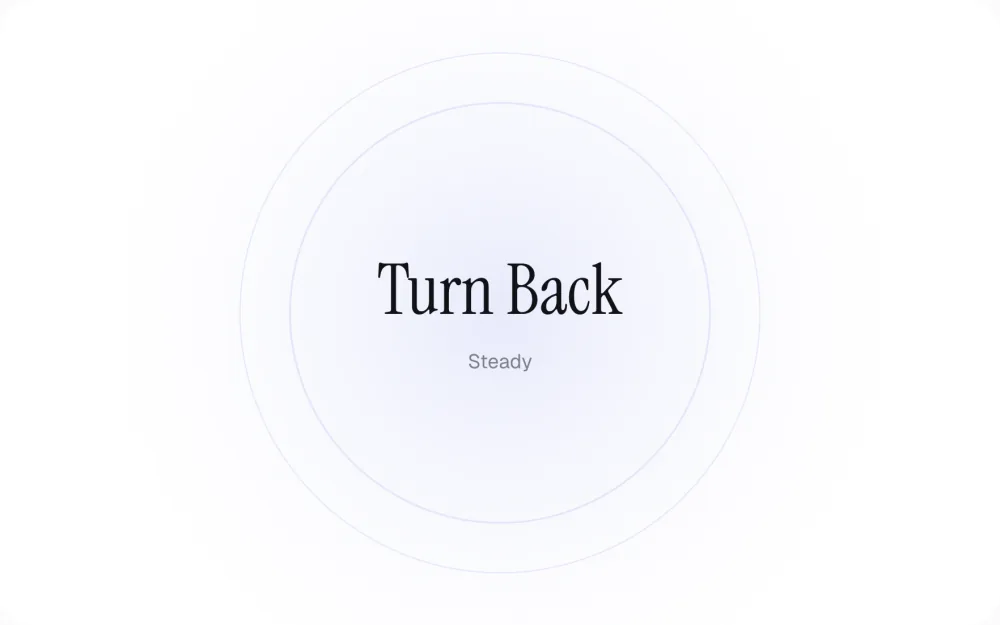
In the game this test is called Turn Back, and it opens with its name in soft violet rings and the level written underneath. You know how hard the round will be before the shape appears.
Turning the shape back
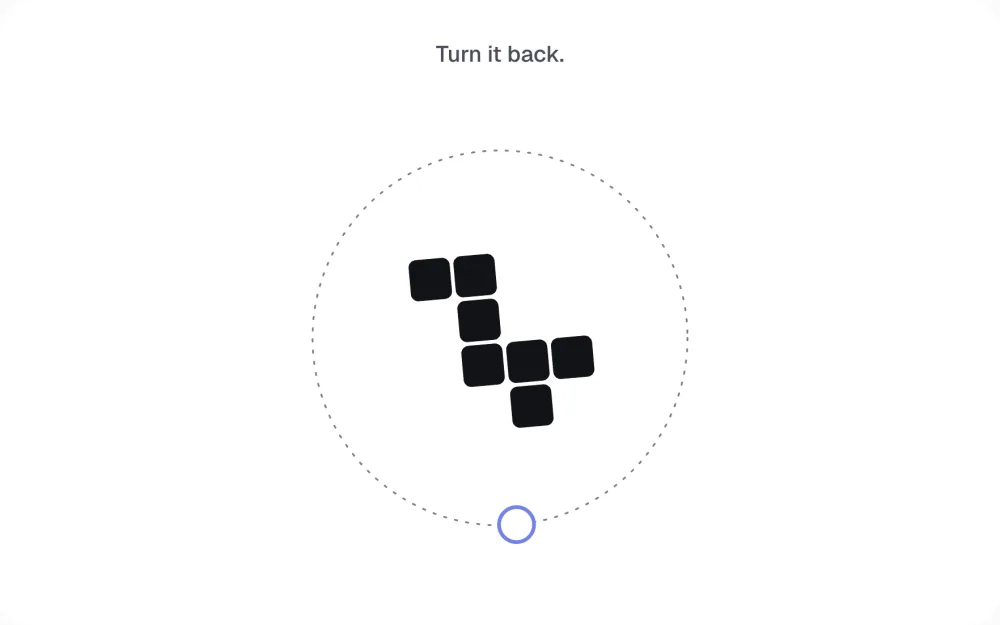
When the shape returns, it stands somewhere between 40 and 180 degrees away from where it started, either way round. Drag anywhere around the middle of the board to turn it. Your finger never covers the shape, and the further from the middle you drag, the finer the control.
On a computer, the arrow keys turn the shape one degree at a time, which is handy for the last small nudge. Turn as often as you like. When the shape looks the way it stood, press Lock in.
Only the angle counts. The shape always sits in the middle of the board, so you never have to place it, just turn it. Your own shape carries a ring in the test's color, which is how you tell it apart from the answer later.
How the mental rotation test is scored
Your answer is scored by the angle left between your shape and its first stance, the short way round. Turning it back exactly scores 100, and the score falls smoothly as the angle grows. It does not matter which way you are off, clockwise or counterclockwise.
| You are off by | Score |
|---|---|
| 0° | 100 |
| 5° | 95 |
| 10° | 80 |
| 15° | 61 |
| 20° | 41 |
| 30° | 14 |
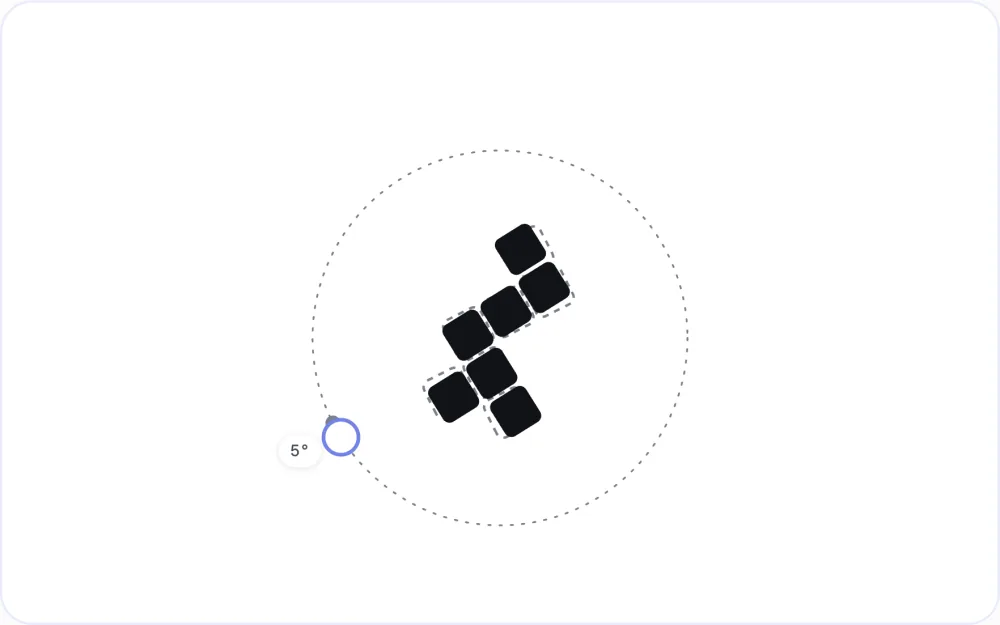
After you lock in, the shape's first stance is drawn in gray next to yours, and a small label tells you how many degrees you were off, such as 8° off. In the daily game, the reveal can also show how close everyone else came that day.
Why a mental rotation test is a classic
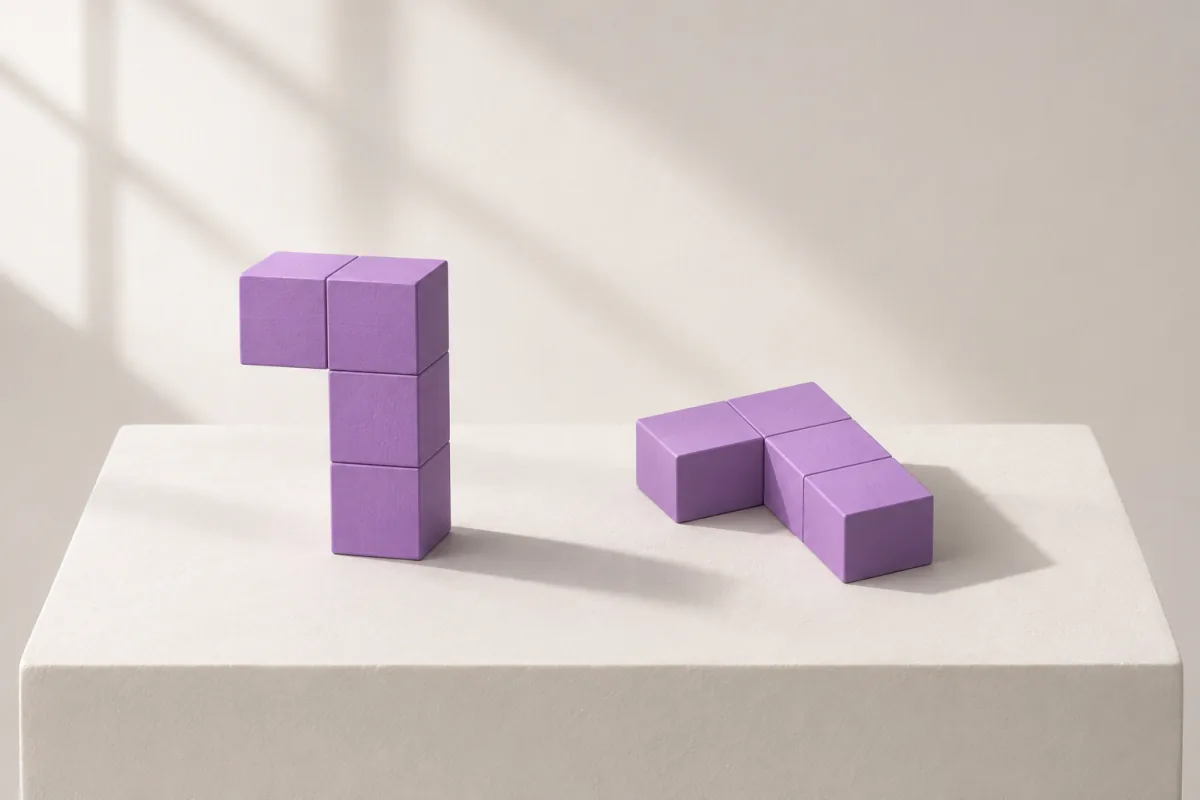
Mental rotation is one of the best known tasks in psychology. In the early 1970s, Roger Shepard and Jacqueline Metzler showed people pairs of block shapes and asked whether one was a turned copy of the other. The time people took grew in a straight line with the angle between the shapes, as if they were turning a picture in their heads at a steady speed.
That finding made the mental image something you could measure. Since then, the mental rotation test has been used to study spatial skill, practice, age and expertise. Pilots, surgeons, architects and puzzle players tend to do well, and the skill improves with practice for almost everyone.
This version adds memory to the mix. You see the shape only briefly, so you have to keep its stance in mind while you turn it. A big turn is harder than a small one, and a shape with many tiles is harder to hold than a short one.
Tips for a better mental rotation test score
- Pick one feature of the shape while it flashes, such as the long arm or the hook at the end, and remember which way it pointed.
- Think in clock directions. If the long arm pointed to two o'clock, turn until it points there again.
- Use the edges of the board as a guide. Note whether an edge of the shape ran level, upright or at a slant.
- Make the big turn first, then stop and compare. Small corrections are easier once the shape is nearly right.
- Use the arrow keys on a computer for the last few degrees.
Most misses on the mental rotation test come from the last few degrees, not from turning the wrong way. A calm final check is usually worth a few points.
Turn Back in the daily Perceptle
This mental rotation test is one of seventeen perception tests in Perceptle, a free daily game of ten quick tests, each scored out of 100 for a total out of 1000. Ten of the seventeen are drawn each day and get harder from first to last. Everyone plays the same puzzle on the same date, and a new one arrives at local midnight.
On this practice page each new round is a little harder than the one before. For more tests of shape and space, try the angle test or the symmetry test. How to play explains the daily game.
Questions and answers
What is a good score on the mental rotation test?
Landing within 5 degrees scores about 95, and 10 degrees off scores 80. Most first tries land somewhere between 5 and 20 degrees off.
Does it matter which way I turn the shape?
No. Only where the shape ends up counts, measured the short way round. Turn clockwise or counterclockwise, whichever is quicker.
Can a shape look the same after a half turn?
No. Every shape in this mental rotation test looks different at every angle, so there is only one right answer.
Can I see the shape again before I lock in?
No. It flashes once, for 1.4 seconds on easy rounds and 0.9 seconds on the hardest. Remembering its stance is part of the test.
Does the mental rotation test work on a phone?
Yes. Drag your finger around the middle of the board to turn the shape. Your finger stays clear of the shape, so you can always see it.
Is it free?
Yes. Perceptle is free in any browser, with no account and nothing to install.
Turn it back in your head
The mental rotation test is one of ten quick tests in today's Perceptle. See how your sense of shape compares with your sense of time, color and memory.
Play today's Perceptle