How the color memory test works
The Perceptle color memory test shows you a color and then takes it away. The color fills the board for between 1.0 and 1.6 seconds, a gray pause follows for 0.8 seconds, and then you find that color again from memory.
There are no names or numbers to lean on. You see the color, hold it in mind through the pause, and match it by eye. The colors are always mid-light, never so dark or so pale that they are hard to make out.
In the game the test is called Color Recall, and its color is orange. On this practice page each new round is a little harder than the last, and the color stays up for less time, down to a single second.
Finding the color again on the field
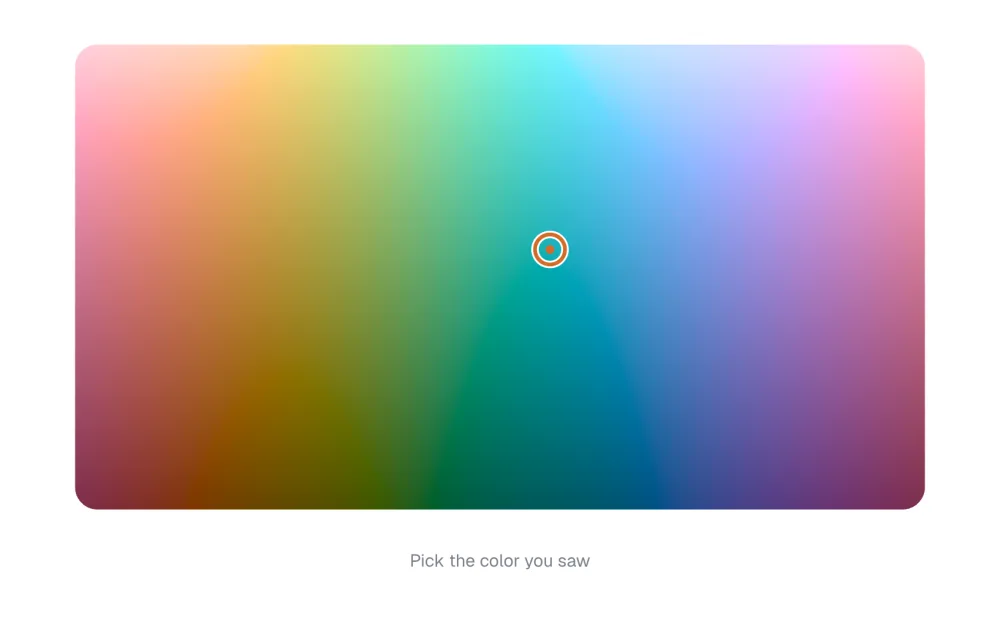
After the pause, the color memory test fills the board with a color field. Hue runs across it from side to side, through the whole circle of colors, and lightness runs up and down, lighter at the top and darker at the bottom. Saturation is fixed to match the color you saw, so there are only two things to judge: which hue, and how light.
Tap where you think the color was and a ring marks your pick. Drag to adjust, then press Lock in.
If you switch tabs while the color is showing, the round is replaced with a fresh one. A glance away never leaves you guessing at a color you barely saw.
Why remembered colors drift
A color memory test like this one measures visual working memory for color: the short-lived store that holds what you have just seen. It is impressively precise for a second or two, but it is not a photograph.
Memories of color drift toward the most typical member of their category. A turquoise tends to come back a little bluer or a little greener, because the mind files it under blue or green and the memory slides toward the middle of that group. Colors that sit between two names get pulled one way or the other.
Lightness tends to slip more than hue. Many people remember the right color family but come back a shade too light or too dark, which is why the reveal reports both.
Reading your color memory test result
Your error is the difference between the original and your pick, measured in OKLab. OKLab is a color space built so that equal steps look roughly equally different, so a miss among the blues costs the same as an equally visible miss among the yellows.
The score runs from 0 to 100 and falls away smoothly as the difference grows:
| Difference in OKLab | Score |
|---|---|
| 0 | 100 |
| 0.025 | 88 |
| 0.05 | 61 |
| 0.075 | 32 |
| 0.1 | 14 |
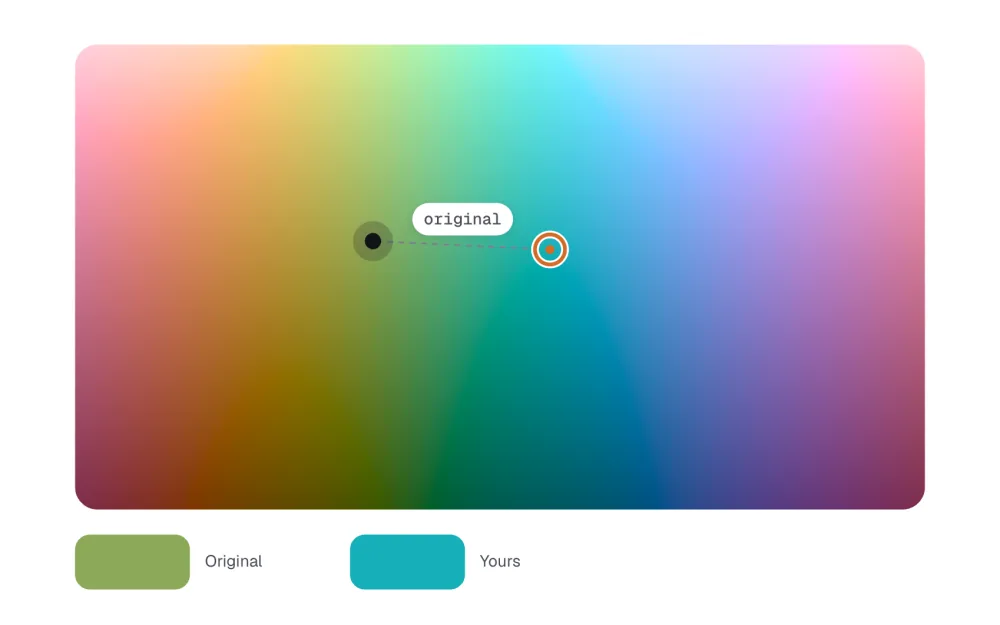
The reveal brings back the field with your ring and the original both marked, the original labeled. Below sit two swatches, Original and Yours, and a line that puts the miss in plain words, such as Hue 18° off · 9% darker.
Where most picks go wrong
- Picking the name instead of the color. Teal is a wide band; match what you saw, not the word you gave it.
- Landing a shade too light or too dark. Hue usually survives the pause better than lightness, so give the up and down position extra thought.
- Letting the gray pause wipe the picture. Hold the color in mind through it rather than planning where to tap.
- Chasing the ring. Small drags back and forth tend to wander; place it, check it once, and lock in.
- Playing on a dim screen or with a strong night filter, which makes nearby colors harder to tell apart.
- Judging yourself on one round. Your fifth color memory test pick says more than your first.
Where the color memory test fits in Perceptle
This color memory test is one of twelve tests in Perceptle, a free daily game of ten quick perception tests. Each day ten are drawn from the twelve and get harder from first to last, so when Color Recall comes late in the lineup, the color stays up for less time. Everyone plays the same puzzle on the same date, with a new one at local midnight.
Scores from all ten add up to a daily total out of 1000. For more color, try the shade matching test. For more memory, the visual memory test flashes a handful of dots and asks where one of them was.
Questions and answers
What is a good score on the color memory test?
A difference of 0.025 in OKLab scores 88, and 0.05 scores 61. A score in the 80s or 90s means your pick sat very close to the original.
How long is the color shown in the color memory test?
Between 1.0 and 1.6 seconds, shorter on harder rounds. A gray pause of 0.8 seconds follows before the color field appears.
Does my screen affect the result?
The original and the field are shown on the same screen, so its colors affect both alike. Dim screens and strong night filters still make it harder, so turn them down if you can.
Why do my picks come back too light or too dark?
Lightness tends to slip in memory more than hue. Many people get the color family right and miss the shade.
Why can't I change the saturation?
It is fixed to the original's, so the field only asks about hue and lightness. That keeps the pick to two judgments.
What if I look away while the color is showing?
If you switch tabs mid-flash, the round is replaced with a fresh one, so you never have to guess at a color you missed.
Is it free?
Yes. Perceptle is free in any browser, with no account and nothing to install.
Ten tests, one score
The color memory test is one of ten quick tests in today's Perceptle. See how well your eyes judge time, color, memory and space, with a fresh puzzle every day.
Play today's Perceptle