What the balance point test asks
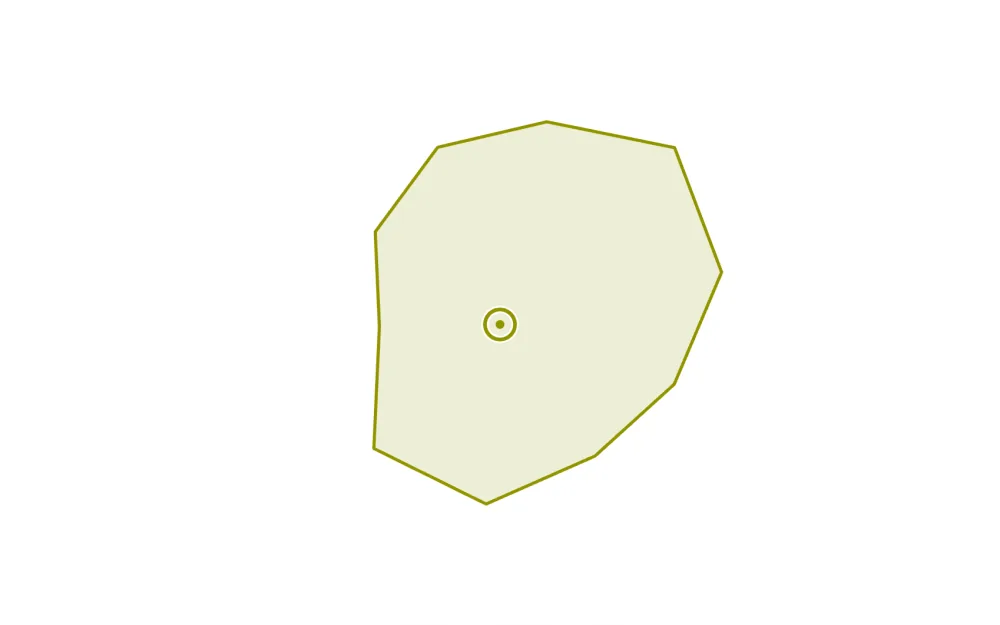
The Perceptle balance point test shows you an irregular flat shape and asks one question: where would it balance on a pin? Tap that spot, drag to adjust, then press Lock in.
Each shape has ten sides, and no two shapes are alike. Some corners reach out, others tuck in. The point where the shape would sit level on a pin is its centroid, the center of its area, as if it were cut from a sheet of evenly thick card.
In the game the test is called Balance Point, and its color is olive green. On this practice page each new round is a little harder than the last, and the shapes get lumpier as you go.
Placing your pin
In the balance point test the shape sits in the middle of the board in pale olive. Tap where you think it balances and a ring marks your pick. You can drag the ring as much as you like before you lock in.
A useful habit is to judge the shape twice: once from side to side, as if it rested on a knife edge running up the screen, and once from top to bottom. Where those two balance lines cross is your pin.
On a phone held upright the board turns to fill the screen, so the shape is as large as it can be under your finger.
Watching it tip: the reveal
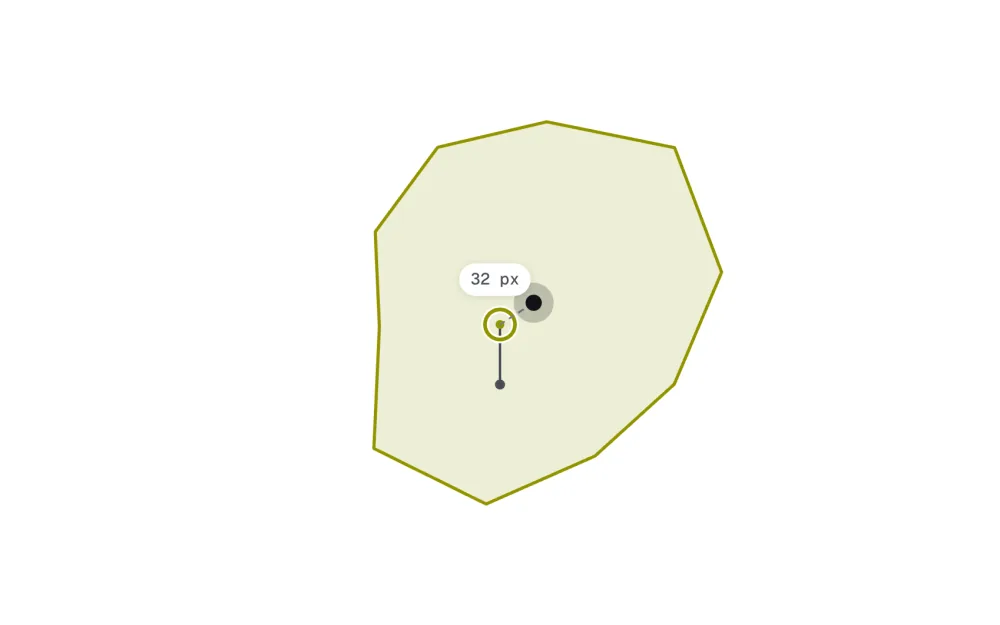
When you lock in, the shape is set on your pin and left to settle. If you were off, it tips toward its heavy side, and the true balance point lies on the side it tips toward. Then the true point appears as a dark dot, with the distance from your pin shown beside it, such as 25 px.
That tip is worth watching. A shape that keeps tipping toward its broad parts round after round is telling you which kind of part you tend to underweight.
Scoring the balance point test fairly
The same miss in pixels means more on a small shape than on a large one, so the score doesn't use raw distance. Your error is the distance to the true balance point divided by the square root of the shape's area, a single size measure that treats big and small shapes alike.
| Miss, as a share of the shape's size | Score |
|---|---|
| 0% | 100 |
| 3% | 88 |
| 6% | 61 |
| 9% | 32 |
| 12% | 14 |
As with every Perceptle test, the score runs from 0 to 100 and falls away smoothly, so a near miss costs a little and a wide one costs a lot.
How the eye finds a center of mass
Finding a balance point is something vision does well. For simple shapes, people judge the center of mass quickly and accurately, and a balance point test with a tidy, rounded shape can feel almost too easy.
Errors grow when parts stick out unevenly. Long thin spikes pull the balance point less than they seem to, because there is little area in them. Wide lobes pull it more, because that is where the weight is. A dramatic spike looks heavier than it is, and a broad bulge looks lighter.
That is why the shapes get lumpier on harder rounds. The more uneven the outline, the further the true point drifts from where the outline seems to center it.
Spikes, lobes and other traps
- Splitting the difference between the far corners. The centroid follows area, not the tips of the outline.
- Letting a long spike drag your pin toward it. Spikes are thin and light, so move back toward the bulk.
- Underrating a wide lobe. A broad bulge carries a lot of weight, even when it doesn't reach far.
- Aiming for the middle of the box around the shape. On a lopsided outline, that is rarely where it balances.
- Rushing to lock in. A second look, side to side and then top to bottom, catches most misses.
- Judging yourself on one shape. Several rounds of the balance point test tell you far more than the first.
How the balance point test fits the daily game
This balance point test is one of twelve tests in Perceptle, a free daily game of ten quick perception tests. Each day ten are drawn from the twelve and get harder from first to last, so a Balance Point shape late in the lineup will be lumpier than one near the start. Everyone gets the same puzzle on the same date, with a new one at local midnight.
The ten scores add up to a daily total out of 1000. If you enjoy finding centers, try the circle center test or the symmetry test, and read how to play before your first daily.
Questions and answers
What is a good score on the balance point test?
A miss of 3% of the shape's size scores 88, and 6% scores 61. Size here means the square root of the shape's area, so the same rule works for every shape.
What exactly is the balance point of a shape?
It is the centroid: the point where the shape, cut from something evenly thick, would sit level on a pin. For a flat shape like this it is the same as the center of mass.
Which way should I move my pin after a tip?
Toward the tip. If the shape tips, the true balance point is on the side it tips toward.
Why are long spikes so misleading?
They catch the eye but hold little area, so they pull the balance point less than they seem to. Wide lobes do the opposite.
Is a bigger shape easier on the balance point test?
No. Your miss is measured against the shape's size, so big and small shapes are judged the same way.
Is it free?
Yes. Perceptle is free in any browser, with no account and nothing to install.
Find your balance, then nine more
The balance point test is one of ten quick tests in today's Perceptle. Put your sense of time, color, memory and space to work, one quick round at a time.
Play today's Perceptle