An optical illusion test you solve by hand
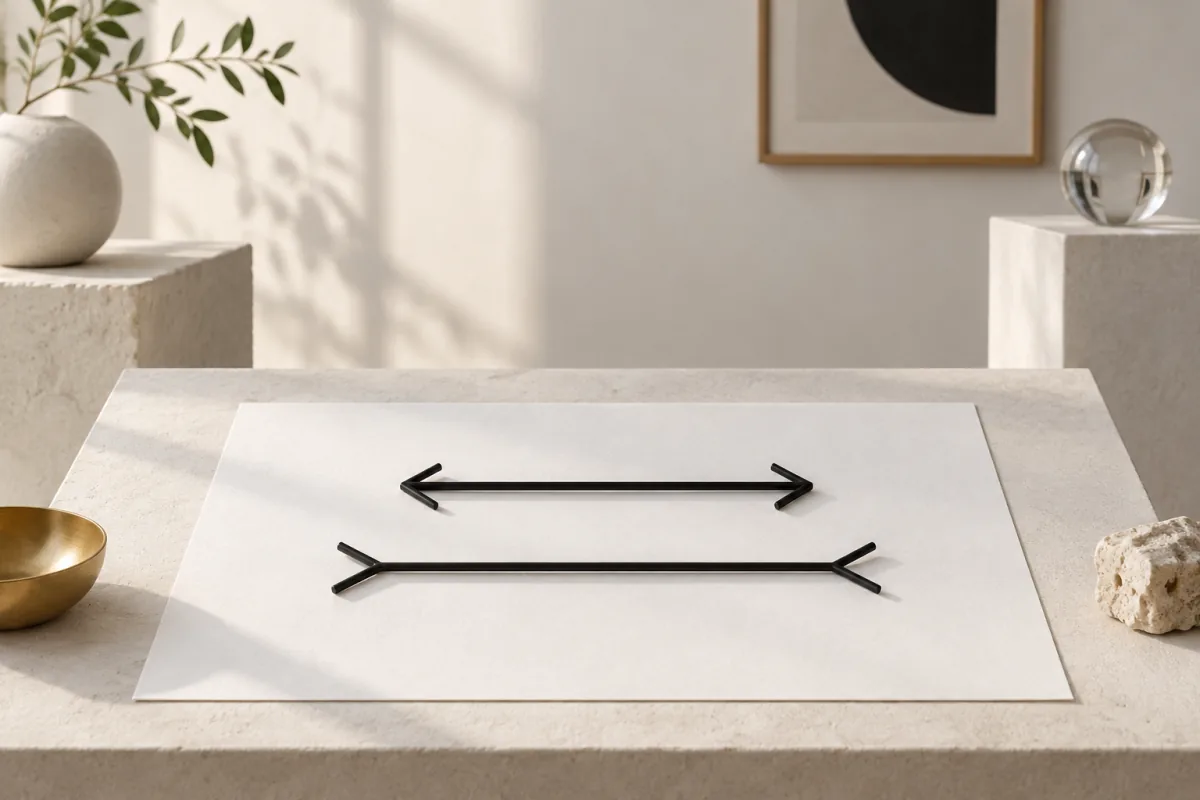
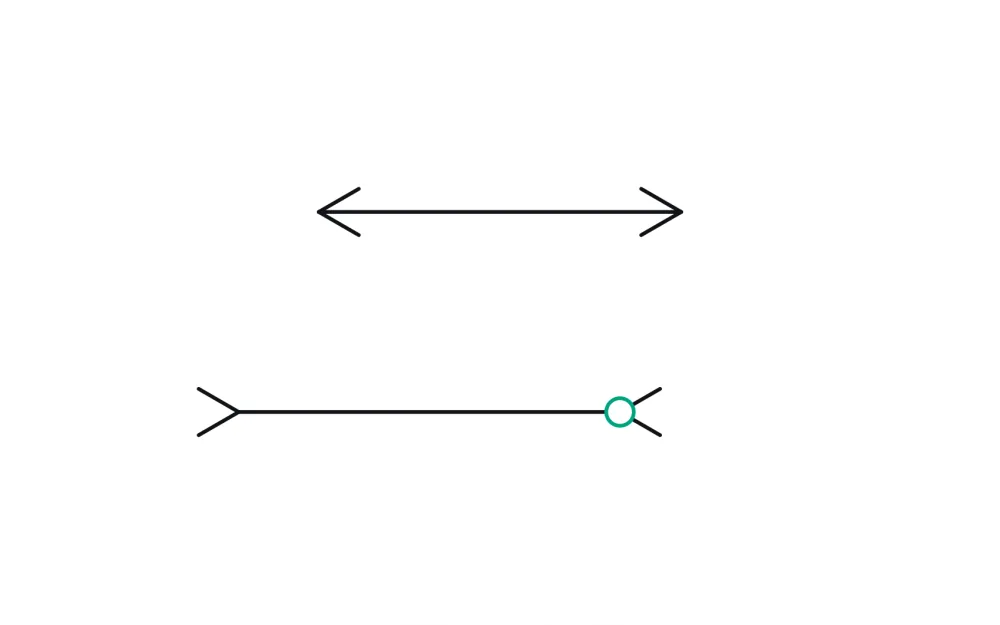
Most optical illusion test pages ask you to look and say which line is longer. This one asks you to fix it. You see two horizontal lines, one above the other. The top line has arrowheads at its ends and a fixed length. The lower line has flared tails, like the feathers of an arrow pointing outward, and a handle on its right end.
Drag the handle to stretch or shrink the lower line until the two straight lines are the same length, then press Lock in. Only the straight lines count. The arrowheads and tails are decoration, and they are also the whole trick: they bend your sense of length without changing anything you are asked to measure.
That makes it a different kind of optical illusion test. Instead of a yes or no answer, you get a number that shows exactly how far the illusion pulled you, and whether you can pull back.
In the game this optical illusion test is called Arrow Lines. It opens with its name in soft teal-green rings and the level written underneath.
The Müller-Lyer illusion, explained
The figure on this board is the Müller-Lyer illusion, named after Franz Carl Müller-Lyer, who published it in 1889. Take two lines of exactly the same length. Cap one with arrowheads pointing in and the other with tails flaring out. The one with the tails looks longer, and the one with the arrowheads looks shorter, every time.
Researchers still debate exactly why. The fins change the overall size of each figure, and your eye seems to judge the whole shape rather than the straight line inside it. Whatever the cause, the effect is strong and easy to reproduce with nothing more than a pencil.
The most striking part is that it persists even when you know about it. You can measure the lines, confirm they match and look again, and they still look different. Knowing about the line length illusion helps you correct for it on purpose, but it does not switch it off.
Matching the two lines
Because the tails make the lower line look longer than it is, the natural thing is to stop stretching too early. That is the most common result on this optical illusion test: most people set the tailed line too short, and feel sure it matches when they lock in.
Harder rounds give the lines bigger fins, which makes the illusion stronger. Early rounds are fairly gentle, but by the later ones the gap between what you see and what is true can be large enough to surprise you.
A useful habit is to look only at the inner points where each straight line meets its fins. Compare those, not the tips of the fins, and drag a little further than feels right.
Optical illusion test scores and the reveal
Your error is the difference between your line and the true length, as a share of the true length. If the target is 400 units long and you set 372, you are 7% off. A perfect match scores 100, and the score falls away smoothly as the miss grows.
| Your miss | Score |
|---|---|
| Exact match | 100 |
| 3.5% off | 88 |
| 7% off | 61 |
| 10.5% off | 32 |
| 14% off | 14 |
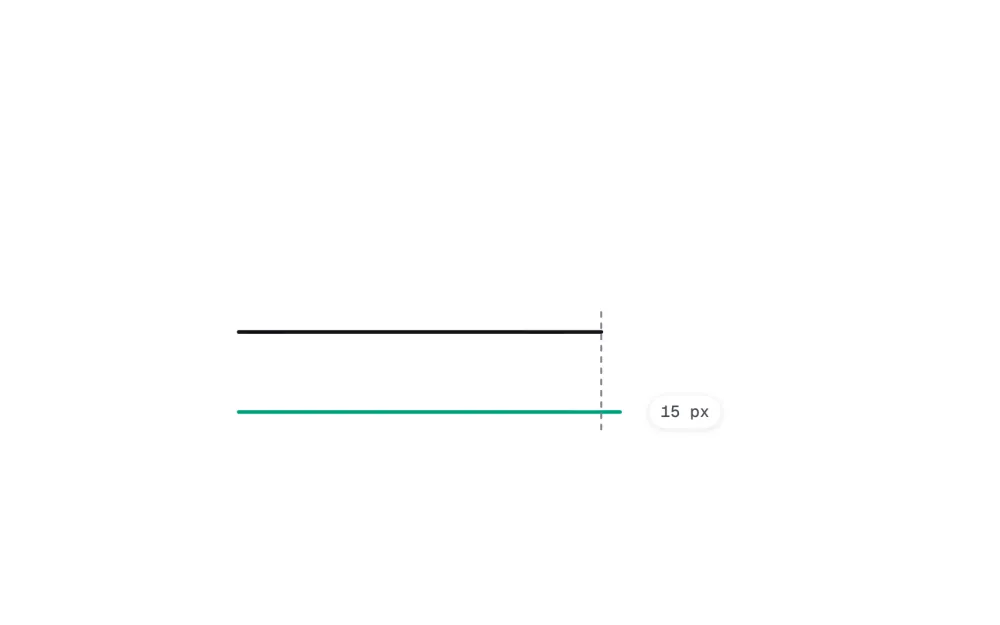
After you lock in, a dashed guide shows where the matching length really ends, and a label gives the difference in units, such as 113 px. It is often a little humbling to see how far the true end sits past where you stopped.
Can you beat the line length illusion?
You cannot stop seeing it, but you can score well anyway. The best players of any optical illusion test like this one stop trusting the first impression and use a rule instead.
- Ignore the fins. Fix your eyes on the corners where the straight line ends and the fins begin.
- Expect to be short. If the lines look equal, the tailed line is probably still too short, so give it a little more.
- Use the reveal as feedback. If your misses are always short by about the same amount, add that amount on purpose next round.
- Make a decision and lock in. Staring longer does not weaken the illusion.
- Play a few rounds of the optical illusion test before you settle on a correction. One round can be a fluke; five rounds show a pattern.
Arrow Lines in the daily Perceptle
This optical illusion test is one of twelve perception tests in Perceptle, a free daily game of ten quick tests, each scored out of 100 for a total out of 1000. Ten of the twelve are drawn each day and get harder from first to last. Everyone plays the same puzzle on the same date, with a new one at local midnight.
On this practice page each round is a little harder than the one before. For more tests of size and space, try the area estimation test or the symmetry test. How to play covers the rest.
Questions and answers
What is this optical illusion test measuring?
How well you can match two line lengths while the Müller-Lyer fins push your eye the other way. A miss of 3.5% scores about 88, and 7% scores 61.
Why do I always set the line too short?
The flared tails make the lower line look longer than it is, so it seems to match before it really does. Most people stop too early.
Do the arrowheads and tails count toward the length?
No. Only the straight lines count. The fins are there to fool you.
Does knowing about the illusion make it go away?
No. The lines still look different. Knowing helps you correct on purpose, by stretching a little further than feels right.
Why are later rounds harder?
The fins get bigger, and bigger fins make the illusion stronger.
Is it free?
Yes. Perceptle is free in any browser, with no account and nothing to install.
Nine more tests are waiting
The optical illusion test is one of ten quick tests in today's Perceptle. See how your eye holds up across time, color, memory and space.
Play today's Perceptle